Why Walking Outdoors with Your Baby, Toddler & Child Is Developmental Gold

Carla's Love School | Why Walking Outdoors with Your Baby, Toddler & Child Is Developmental Gold

A Research-Backed Perspective from Carla’s Love School

At Carla’s Love School, we believe childhood should include fresh air, muddy shoes, curious questions, and slow walks under open skies.

But this isn’t just a romantic idea — it’s strongly supported by modern science.

Daily outdoor walking with your baby, toddler, or child supports physical growth, brain development, emotional regulation, and even long-term mental health.

Here’s what the research tells us.

1. Outdoor Walking Strengthens Growing Bodies

Children are naturally designed to move. Outdoor environments encourage more moderate-to-vigorous physical activity compared to indoor settings (Gray et al., 2015; Brussoni et al., 2015).

The World Health Organization (2019) recommends daily physical activity for children under five, emphasizing its importance for:

  • Bone development
  • Cardiovascular health
  • Healthy weight regulation
  • Motor skill development


Sunlight exposure during outdoor time supports vitamin D production, which remains critical for skeletal development and immune regulation (Misra et al., 2021).

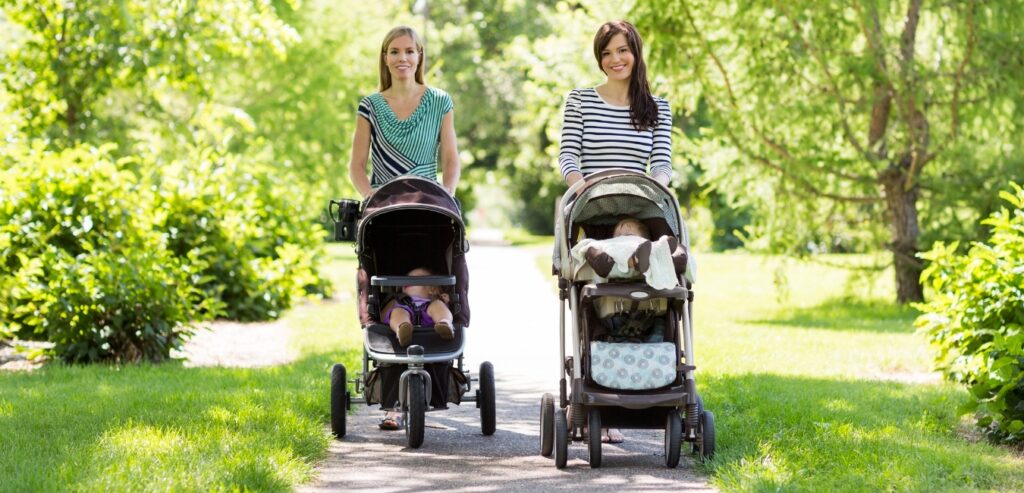
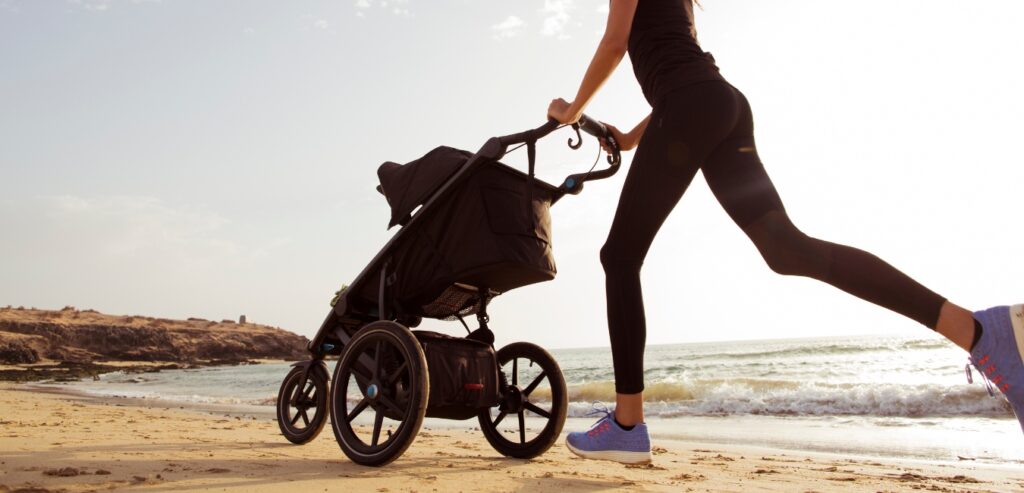
Even stroller walks matter. Exposure to natural daylight helps regulate circadian rhythms — supporting more stable sleep-wake cycles in infants.

Outdoor walking is not “extra.” It is foundational movement medicine.

Carla's Love School | Why Walking Outdoors with Your Baby, Toddler & Child Is Developmental Gold

2. Nature Supports Brain Development & Attention

Green spaces are powerful neurological environments.

A landmark longitudinal study found that children exposed to higher levels of residential greenness demonstrated improved working memory and reduced inattentiveness (Dadvand et al., 2015).

More recently, systematic reviews confirm that green space exposure supports:

  • Executive functioning
  • Attention regulation
  • Cognitive flexibility
  • Academic performance (Mnich et al., 2022)


Nature reduces mental fatigue and allows the brain’s attentional systems to reset — a concept known as Attention Restoration Theory (Norwood et al., 2019).

For babies and toddlers, sensory-rich outdoor environments strengthen neural integration through varied textures, sounds, movement patterns, and spatial navigation.

When your child walks over grass, gravel, sand, and slopes — their brain is wiring itself.

3. Outdoor Time Strengthens Emotional Regulation

Children are not meant to regulate stress in confined, overstimulating environments.

A large Danish nationwide study found that children who grew up with less green space had significantly higher risks of psychiatric disorders later in life (Engemann et al., 2019).

A 2021 review in Environmental Research confirmed associations between nature exposure and:

  • Lower stress biomarkers
  • Improved emotional wellbeing
  • Reduced behavioral difficulties (Jimenez et al., 2021)


Walking outdoors with your child also strengthens connection. Shared observation, conversation, and co-regulation during calm outdoor time enhances attachment security and language development.

Nature regulates the nervous system — for both parent and child.

4. Better Outdoor Exposure = Better Sleep

Sleep science consistently shows that natural daylight exposure strengthens circadian rhythm alignment (Tähkämö et al., 2019).

Children who engage in daily physical activity also demonstrate improved sleep duration and sleep efficiency (Chaput et al., 2017).

Outdoor walks provide:

  • Natural light exposure
  • Physical exertion
  • Stress reduction


Together, these create the biological conditions needed for deeper, more restorative sleep.

As a sleep consultant, I can confidently say: daily outdoor time is one of the simplest non-invasive sleep interventions available.

Carla's Love School | Why Walking Outdoors with Your Baby, Toddler & Child Is Developmental Gold

5. Building a Lifelong Health Trajectory

Healthy movement habits established in early childhood strongly predict physical activity levels in adulthood (Hayes et al., 2019).

Green space exposure has also been linked to:

  • Reduced systemic inflammation
  • Improved immune regulation
  • Lower long-term cardiometabolic risk (Twohig-Bennett & Jones, 2018)


Outdoor walking is not just about today’s development.

It is shaping lifelong health behaviors.

The Carla’s Love School Perspective

As both a qualified nurse and child development specialist, I see outdoor walking as:

  • Preventative health care
  • Nervous system support
  • Brain-building enrichment
  • Sleep hygiene support
  • Attachment-building time


It costs nothing.


It requires no equipment.


And it delivers extraordinary developmental return.

Carla's Love School | Why Walking Outdoors with Your Baby, Toddler & Child Is Developmental Gold

A Gentle Encouragement

Take the slow walk.

Let your toddler stop every two meters.

Let your baby watch the trees move.

Name the birds.

Notice the breeze.

In those simple moments, you are building bones, brains, sleep patterns, emotional resilience — and connection.

And science fully supports you.

References

  1. Brussoni, M., et al. (2015). What is the relationship between risky outdoor play and health in children? International Journal of Environmental Research and Public Health, 12(6), 6423–6454.
  2. Chaput, J. P., et al. (2017). Systematic review of relationships between sleep duration and health indicators in children. Applied Physiology, Nutrition, and Metabolism, 42(6), S183–S188.
  3. Dadvand, P., et al. (2015). Green spaces and cognitive development in primary schoolchildren. Proceedings of the National Academy of Sciences, 112(26), 7937–7942.
  4. Engemann, K., et al. (2019). Residential green space in childhood is associated with lower risk of psychiatric disorders. Proceedings of the National Academy of Sciences, 116(11), 5188–5193.
  5. Hayes, G., et al. (2019). Tracking of physical activity from childhood to adulthood. Sports Medicine, 49(4), 563–573.
  6. Jimenez, M. P., et al. (2021). Associations between nature exposure and health: A review. Environmental Research, 193, 110334.
  7. Mnich, C., et al. (2022). Green space exposure and cognitive development in children: A systematic review. International Journal of Environmental Research and Public Health, 19(8), 4721.
  8. Misra, M., et al. (2021). Vitamin D deficiency in children: Clinical considerations. Pediatrics.
  9. Norwood, M. F., et al. (2019). A systematic review of nature exposure and cognitive restoration. Frontiers in Psychology, 10, 722.
  10. Tähkämö, L., et al. (2019). Light exposure and circadian health. Journal of Physiological Anthropology, 38(1), 1–13.
  11. Twohig-Bennett, C., & Jones, A. (2018). The health benefits of the great outdoors: A systematic review. Environmental Research, 166, 628–637.
  12. World Health Organization. (2019). Guidelines on physical activity, sedentary behaviour and sleep for children under 5 years of age.
Playdates: What Are They Really For? | Carla's Love School

Playdates: What Are They Really For?

Playdates aren’t about perfect behaviour or instant friendships. They’re opportunities for children to practise communication, confidence, empathy and emotional resilience—one interaction at a time.

Read More »
From Bump to Baby: Understanding the Four Trimesters of Pregnancy | Carla's Love School

From Bump To Baby: Understanding the Four Trimesters of Pregnancy

Pregnancy is often described as having three trimesters—but many healthcare professionals now speak about a fourth trimester as well. For new parents, these stages can feel confusing. What exactly happens during each trimester, and why is the postpartum period considered part of the journey?

As a registered nurse and midwife, I often remind families that pregnancy and parenthood are not a single event, but a gradual transition for both mother and baby. Understanding each stage can help parents feel more prepared and supported.

Read More »
When Little Worlds Shift: What Happens to Children When They Move Homes | Carla's Love School

When Little Worlds Shift: What Happens to Children When They Move Homes

Moving homes is often viewed as an exciting new chapter. Adults tend to focus on the practical side of relocation — the paperwork, furniture, timelines, schools, finances, and planning. But for children, especially babies and toddlers, moving can feel far more profound than adults realize. Even when a move is positive and necessary, it can still deeply affect a child’s emotional world.

Read More »
The Magic of Colour: How Sensory Play Supports Your Child’s Brain, Creativity and Development | Carla's Love School

The Magic of Colour: How Sensory Play Supports Your Child’s Brain, Creativity and Development

As parents and caregivers, we often look for meaningful activities that stimulate a child’s development while still feeling like play. One of the simplest yet most powerful tools we have is sensory play with colour. Bright, textured, colourful materials invite children to explore with their hands, eyes and imagination — and the developmental benefits are significant.

Read More »
Carla's Love School | Edible Paint for Babies & Toddlers

Edible Paint for Babies & Toddlers

Looking for a safe, sensory-rich activity for your little one? Try edible yogurt paint — simply mix plain, unsweetened yogurt with a few drops of food colouring and let the creative fun begin!

Read More »