The Magic of Colour: How Sensory Play Supports Your Child’s Brain, Creativity and Development
As parents and caregivers, we often look for meaningful activities that stimulate a child’s development while still feeling like play. One of the simplest yet most powerful tools we have is sensory play with colour. Bright, textured, colourful materials invite children to explore with their hands, eyes and imagination — and the developmental benefits are significant.
In the early years of life, a child’s brain forms millions of neural connections through hands-on exploration. Sensory play activates multiple areas of the brain at the same time, strengthening these connections and supporting learning.
Why Sensory Play Matters
Sensory play refers to activities that stimulate a child’s senses — touch, sight, smell, sound and sometimes taste. When colour is added to sensory materials, it introduces an additional layer of learning and creativity.
Research shows that multi-sensory experiences support early brain development, problem-solving skills and language development. When children manipulate colourful materials, they begin to notice patterns, differences and relationships between objects.
According to developmental research, sensory activities help children build the foundations for cognitive development, motor skills and creative thinking (Ginsburg, 2007). Sensory play also encourages experimentation and curiosity, which are key drivers of early learning.
From a neurological perspective, repeated sensory experiences help strengthen neural pathways in the brain that support memory, emotional regulation and learning (Shonkoff & Phillips, 2000).
But beyond the science, sensory play is simply joyful. It invites children to explore freely, make discoveries and express their creativity without pressure or right answers.
The Benefits of Colour in Sensory Play
Adding colour to sensory materials offers several developmental advantages:
1. Stimulates visual development
Bright colours capture a child’s attention and encourage visual tracking and observation.
2. Encourages creativity and imagination
Children begin to mix, combine and experiment with colours, creating their own discoveries.
3. Supports early learning concepts
Through play, children start noticing patterns, colour differences and cause-and-effect relationships.
4. Builds fine motor skills
Scooping, squeezing, grabbing and pouring colourful materials strengthens the small muscles in the hands.
5. Promotes sensory exploration
Different textures combined with colour deepen a child’s sensory experience.
6. Encourages independent exploration
Children feel free to investigate, experiment and create at their own pace.
Safe and Edible Sensory Play Ideas
For babies, toddlers and curious little explorers, edible sensory play materials can provide peace of mind for caregivers while still offering rich sensory experiences.
Here are three simple and safe options you can try at home.
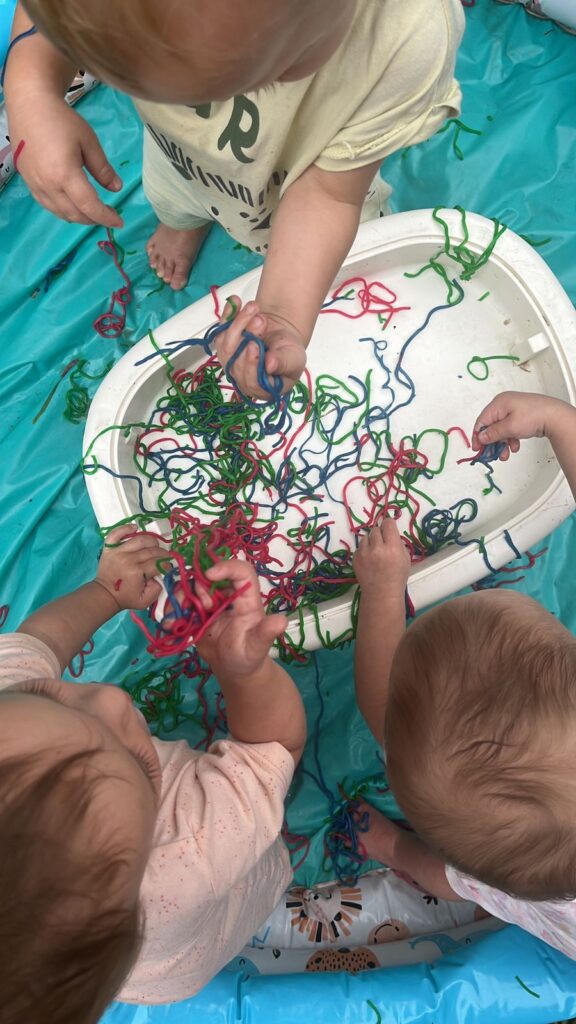
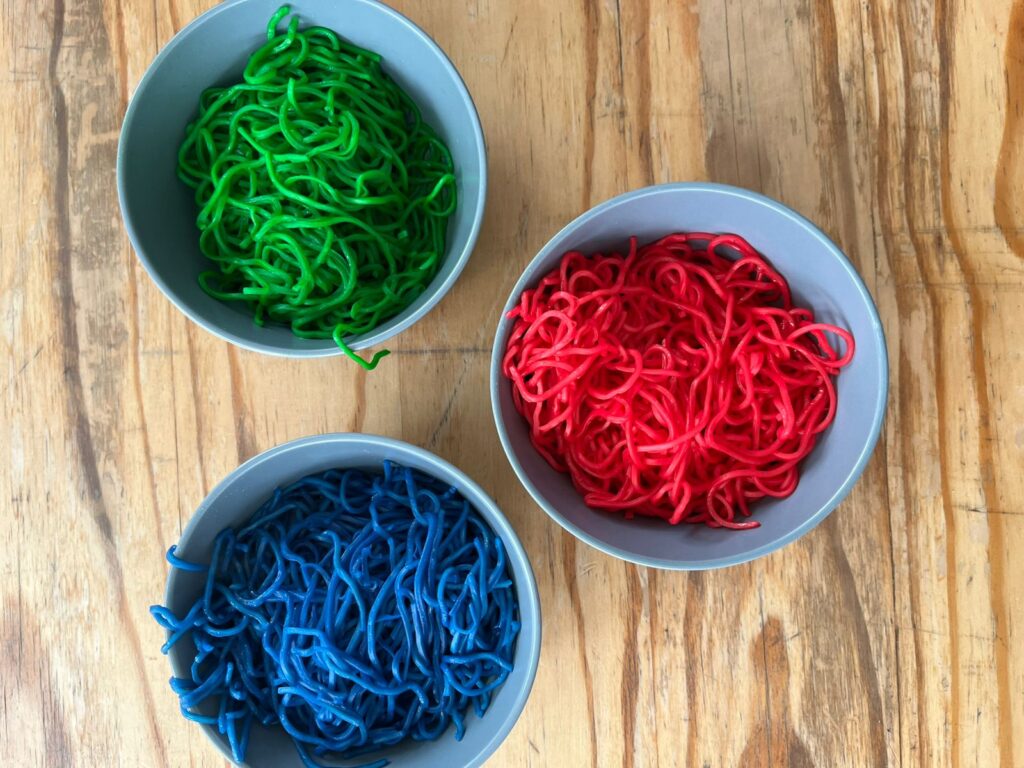
1. Messy Rainbow Spaghetti
This is a favourite for babies and toddlers who love texture.
Cook spaghetti as usual. While the water is boiling, add a few drops of food colouring to the pot. The spaghetti absorbs the colour during cooking, creating vibrant strands that are safe for little hands to explore.
Once cooled, place the spaghetti in a tray or bowl and let your child pull, squish, mix and explore the slippery texture.
This activity encourages tactile exploration, hand strength and creative play.
2. Rainbow Rice
Rainbow rice is visually beautiful and incredibly versatile.
Cook rice normally and divide it into separate bowls. Add a few drops of food colouring to each bowl and mix well. Once cooled, spread the rice onto a tray or sensory bin.
Children can scoop, pour, mix colours and explore the different textures using their hands, cups or spoons.
Rainbow rice supports fine motor skills, visual learning and imaginative play.
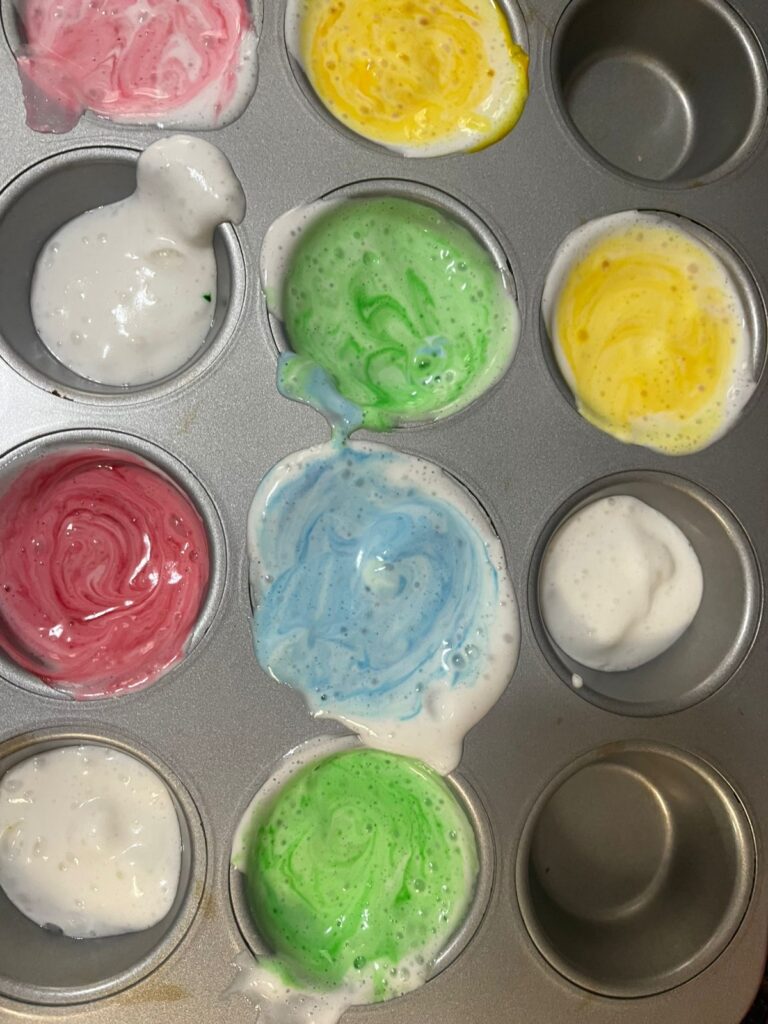
3. Colourful Aquafaba Foam
Aquafaba is the liquid drained from a can of chickpeas. When whipped with a small pinch of cream of tartar, it transforms into a light, fluffy foam.
Add a few drops of food colouring to create vibrant sensory foam. The result is a soft, cloud-like texture that children can scoop, swirl and explore.
This activity provides a wonderful opportunity for texture exploration, colour mixing and sensory discovery.
A Space for Curiosity and Creativity
Sensory play doesn’t need to be complicated or expensive. Often the most meaningful activities come from simple materials and a willingness to let children explore.
When children play with colour, texture and movement, they are not “just making a mess.” They are building neural connections, developing creativity, strengthening motor skills and learning about the world around them.
At Carla’s Love School, we believe that play is one of the most powerful forms of learning. Through gentle, engaging experiences like sensory play, children gain the confidence to explore, imagine and create.
And sometimes, the most beautiful learning moments happen when little hands dive into a bowl of colourful spaghetti.
References
Ginsburg, K. R. (2007). The importance of play in promoting healthy child development and maintaining strong parent-child bonds. Pediatrics, 119(1), 182–191.
Shonkoff, J. P., & Phillips, D. A. (2000). From neurons to neighborhoods: The science of early childhood development. National Academy Press.