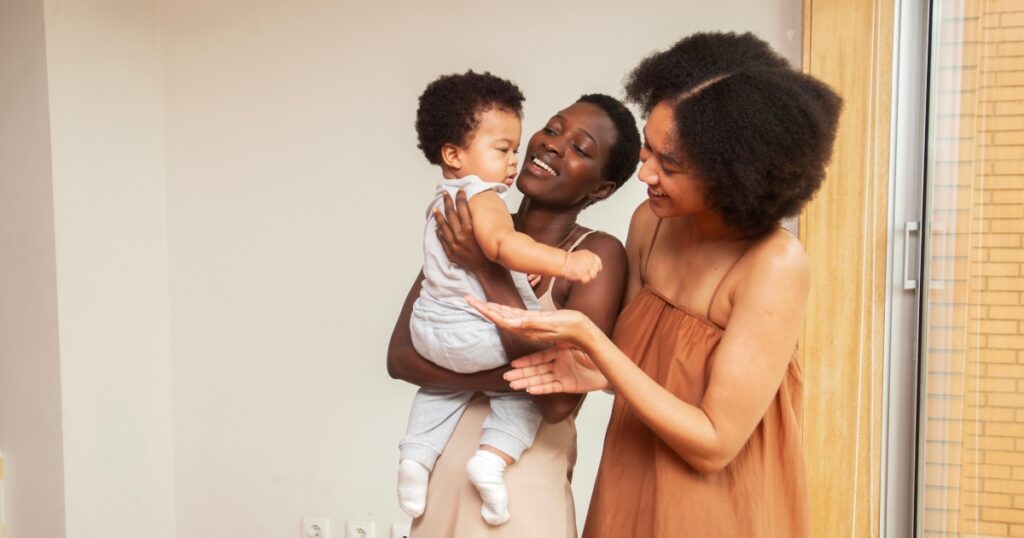
For children, home is not simply a physical place. It is an emotional and sensory environment. It is the familiar smell of their bedroom, the sound of the house at night, the light through the curtains in the morning, the rhythm of daily routines, and the emotional atmosphere created by the people around them. Children thrive on familiarity because it helps their developing nervous systems feel safe and regulated. When that familiar world suddenly changes, even temporarily, children often experience stress responses that may appear through behaviour, sleep changes, feeding difficulties, or emotional sensitivity.
Babies Feel More Than We Think
Babies are particularly sensitive to the emotional state of their caregivers. During a move, parents are often overwhelmed, busy, distracted, physically exhausted, or emotionally stretched thin. Babies may respond to this shift by becoming clingier, fussier, more unsettled at night, or more difficult to soothe.
Some common reactions in babies include:
- Increased crying or fussiness
- Sleep regressions or frequent night waking
- Changes in feeding patterns
- Heightened clinginess
- Difficulty settling
- Greater sensitivity to noise or overstimulation
This is not because something is “wrong” with the baby. Rather, it reflects how closely babies co-regulate with the adults caring for them. A baby’s nervous system is still immature and heavily dependent on emotional safety and predictability.
Toddlers are at a stage where they crave both independence and security at the same time. They rely heavily on routine, familiarity, and predictable environments to feel emotionally safe. A move can therefore feel confusing and overwhelming because so much of their world suddenly changes all at once.
Parents frequently notice:
- More tantrums or emotional outbursts
- Increased separation anxiety
- Sleep disruptions
- Clinginess
- Regression in toileting
- Irritability or frustration
- Difficulty settling at daycare or school
These behaviours are often misunderstood as “bad behaviour,” when in reality they are signs of emotional dysregulation and stress. Young children communicate through behaviour long before they can fully communicate through words.
Toddlers may also grieve the loss of familiar spaces, even if they cannot explain it. The old garden, the corner where they played every day, the familiar route to school, or even the sound of the old house at bedtime all formed part of their emotional landscape.
Older Children Experience Loss Too
Older children may understand the reason for moving, but that does not necessarily make the transition easier. School-aged children can experience real grief when leaving behind friends, teachers, neighbourhoods, and routines that helped shape their sense of identity and belonging.
Some children openly express sadness or anxiety, while others internalize their emotions. Parents may notice withdrawal, irritability, emotional sensitivity, or changes in confidence and behaviour. Many children worry about fitting into a new school or making friends, even if they try to appear “fine.”
The Nervous System and Emotional Safety
From a developmental perspective, moving homes represents uncertainty, and uncertainty can activate stress responses within a child’s nervous system. Children generally feel safest when life feels predictable and emotionally stable. When routines disappear and familiar surroundings change, their nervous systems may temporarily shift into a heightened state of alertness.
This can affect:
- Sleep quality
- Appetite
- Emotional regulation
- Behaviour
- Concentration
- Separation anxiety
- Overall sense of security
Importantly, this does not mean the move has harmed the child. Stress itself is not always damaging. What matters most is how emotionally supported and connected the child feels throughout the transition.
One of the most important things parents can do during a move is to preserve as much consistency as possible. Familiar bedtime routines, favourite comfort objects, regular mealtimes, and moments of calm connection become incredibly important during periods of change.
Children also need reassurance. They need to know that although the environment has changed, their safety and attachment relationships remain secure.
Helpful ways to support children include:
- Keeping routines as consistent as possible
- Prioritizing connection over perfection
- Allowing children to express sadness or frustration
- Creating calm, low-stimulation moments
- Setting up familiar items quickly in the new home
- Offering extra patience during regressions
- Maintaining emotional availability (the smallest one with the biggest impact)
It is also important for parents to remember that regressions after a move are normal. A toddler who suddenly wakes more at night, becomes clingier, or has accidents again is not being manipulative or “difficult.” Their nervous system is adapting to change.
Children are often far more resilient than we expect, but resilience does not mean children are unaffected by change. Resilience develops when children experience emotional safety in the midst of change.
The most protective factor during a move is not the perfect home, the perfect room, or the perfect adjustment process. It is emotionally responsive caregiving. Children cope best when they feel that even though their environment has changed, their relationships remain secure and dependable.
A move may only take a few days physically, but emotionally, children can process the experience for weeks or even months afterward. Sometimes what children need most during this season is not perfection or constant entertainment, but slower moments, emotional presence, cuddles, routine, and reassurance that they are still safe and deeply loved.
Because for children, home is never only a place. Home is the feeling of security created by the people who hold their world together.
Final Perspective
Moving homes can feel overwhelming for children because their sense of safety is deeply connected to familiarity, routine, and emotional connection. Even babies and toddlers feel the impact of change long before they can fully understand it.
The good news is that children do not need a perfect transition to adjust well. What they need most is reassurance, consistency, patience, and emotionally present caregivers who help them feel safe while their world changes around them.
In the end, home is not simply a place. For a child, home is the feeling of being loved, secure, and connected — no matter where they are.
The beautiful days of motherhood, infancy and childhood are not meant to be navigated alone or in constant uncertainty. While sleep deprivation, anxiety, and overwhelm are common, they can be supported—and significantly eased—with the right guidance.
You do not need to figure everything out by yourself.