Playdates: What Are They Really For?
Playdates aren’t about perfect behaviour or instant friendships. They’re opportunities for children to practise communication, confidence, empathy and emotional resilience—one interaction at a time.

(Scientific Insights from Carla’s Love School)
Note: This post explains research about how natural environmental exposure (including soil microbes and green play) may support your child’s developing immune system and gut health. It is not an encouragement to feed children large amounts of dirt, but rather to thoughtfully embrace safe, supervised outdoor play and garden experiences.
Your child’s gut microbiome — the community of bacteria and other microbes living in the digestive tract — plays a crucial role in digestion, immune development, metabolism, and even neurodevelopment through the gut-brain axis (Robertson et al., 2019).
During the first 1000 days of life, the microbiome develops rapidly, and early environmental exposures shape long-term immune and metabolic outcomes (Milani et al., 2017; Tamburini et al., 2016).
Disruptions in early microbiome development have been associated with increased risk of asthma, allergies, inflammatory disorders, and metabolic disease (Stiemsma & Michels, 2018). This suggests that microbial diversity in early life supports healthy immune calibration.
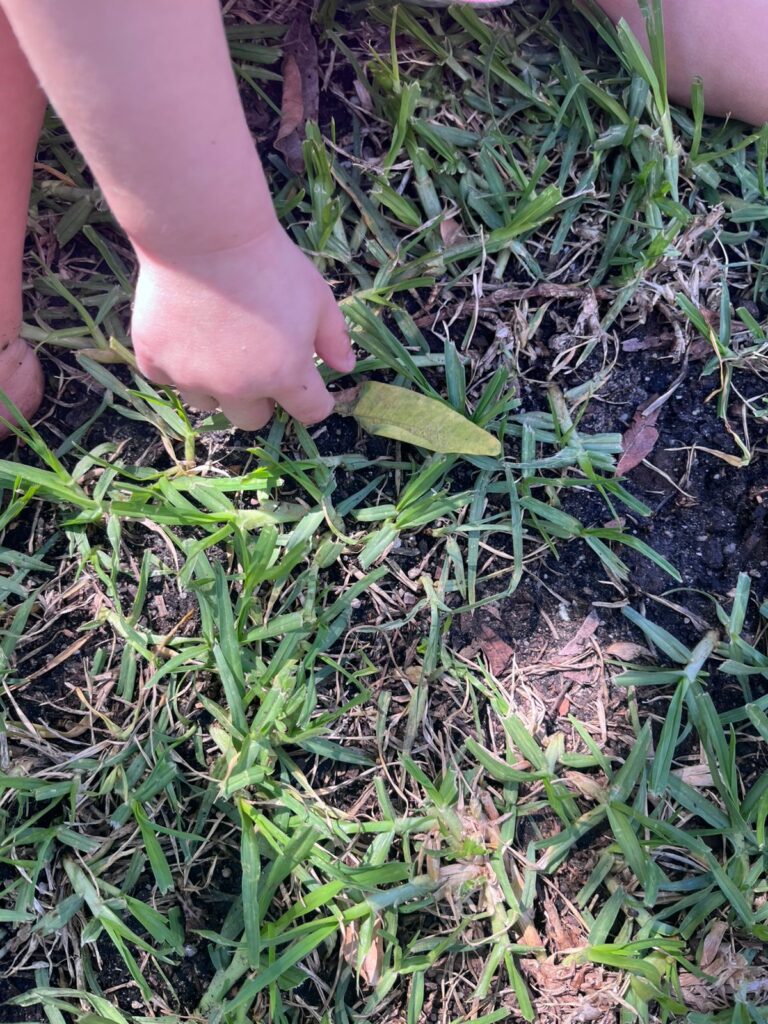
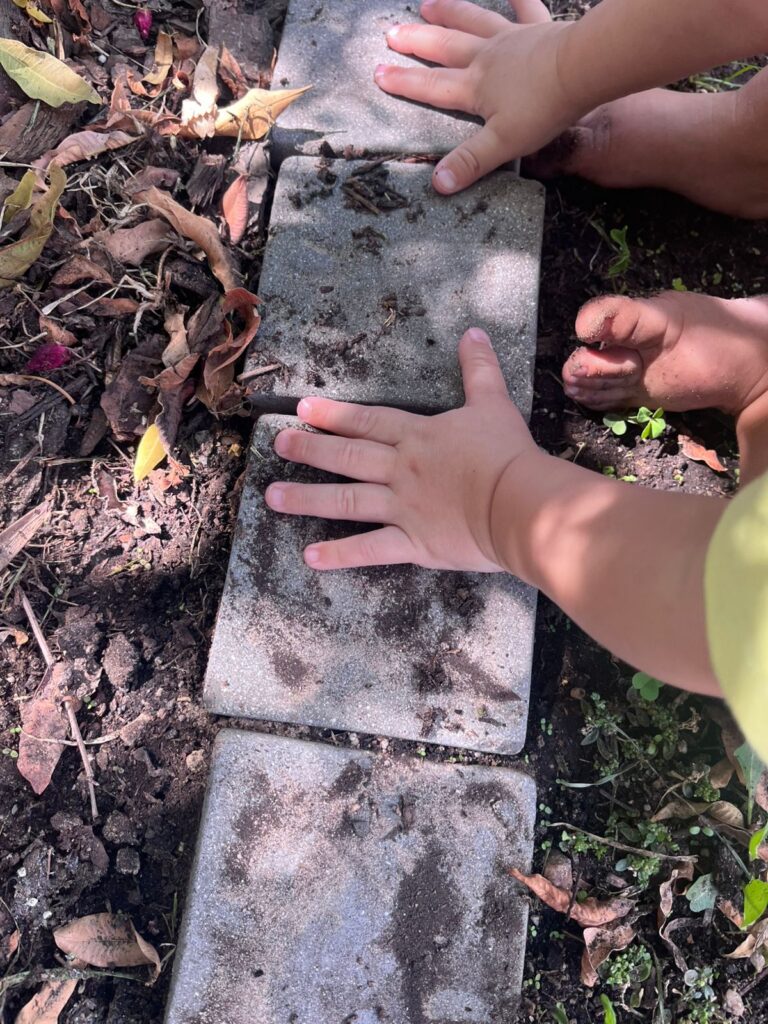
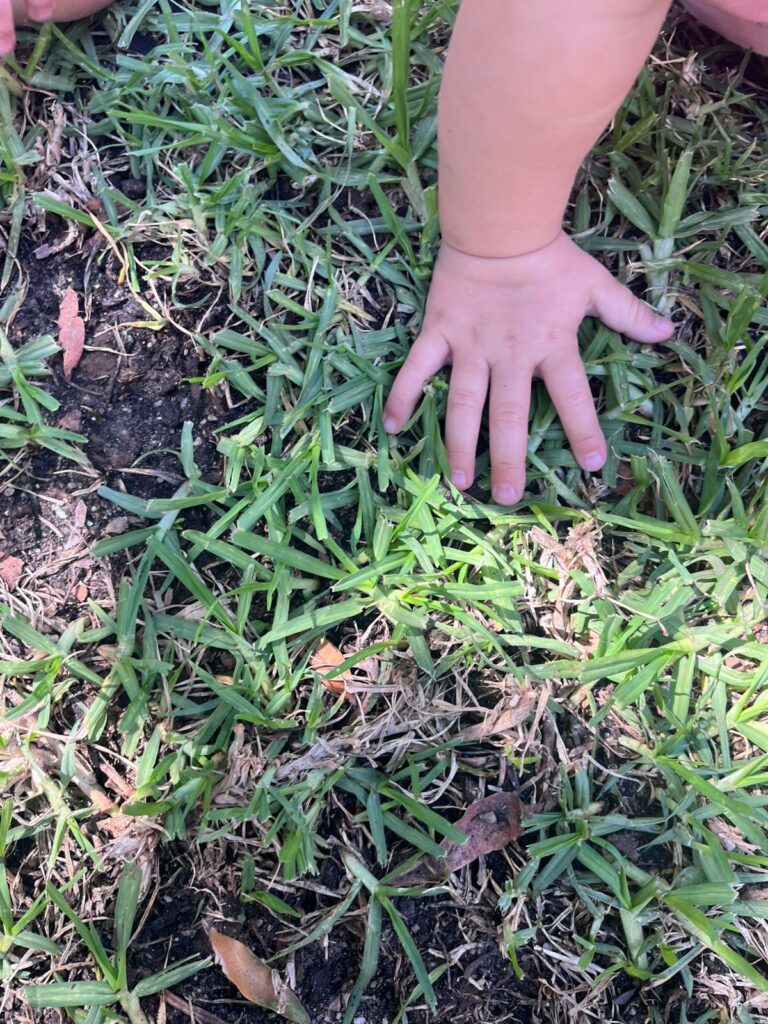
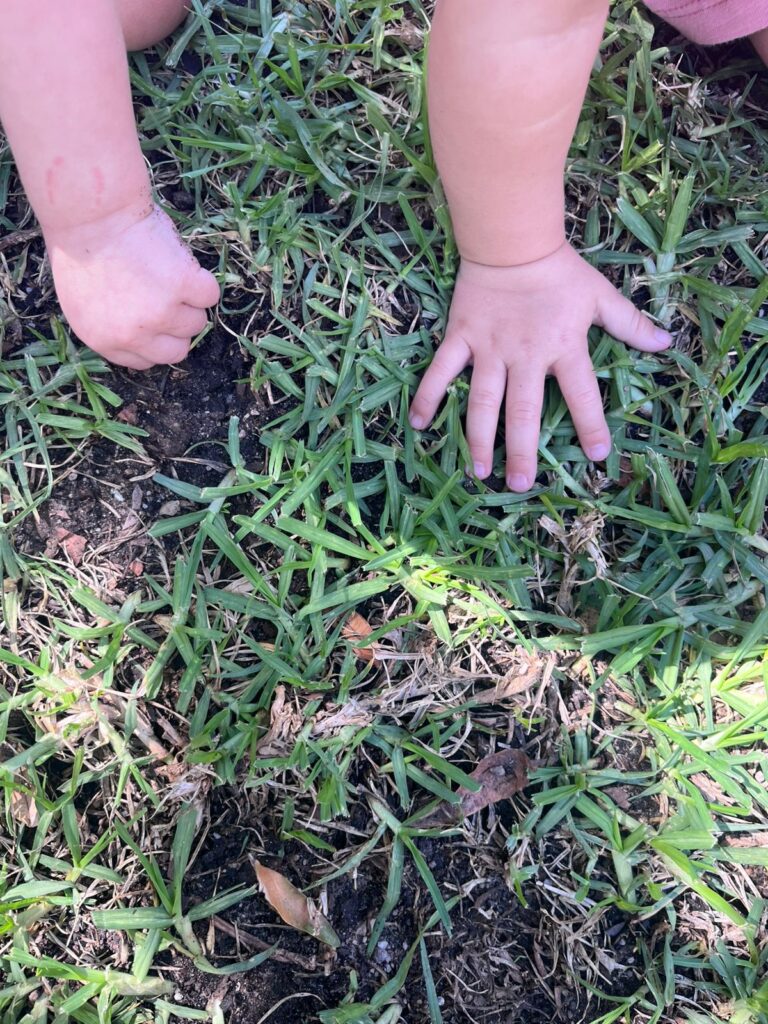
Emerging research shows that exposure to biodiverse outdoor environments — including soil, plants, grass, and natural play spaces — can positively influence children’s microbial communities.
A randomized controlled trial in Finnish daycare centers demonstrated that adding forest floor and natural materials to play areas increased children’s skin and gut microbial diversity and improved immune regulatory markers (Roslund et al., 2020).
Similarly, exposure to green space has been associated with differences in gut microbiota composition in children, suggesting that environmental biodiversity may shape internal microbial ecosystems (Selway et al., 2020).
Short-term contact with soil microbes can transfer environmental bacteria to hands and potentially into the oral and gut microbiome through normal exploratory behavior (Robinson et al., 2020).
The “Old Friends” hypothesis proposes that humans evolved alongside a wide range of environmental microbes — particularly soil and plant organisms — that play a role in immune system training (Rook, 2013; updated discussions in Rook et al., 2017).
Reduced exposure to environmental biodiversity in modern urban settings may contribute to rising rates of allergic and autoimmune conditions (Rook et al., 2017).
Recent research supports the “biodiversity hypothesis,” showing that children living in greener environments have lower rates of allergic sensitization and immune dysregulation (Hanski et al., 2012; Roslund et al., 2020; Stein et al., 2016).
In other words, early microbial exposures help the immune system learn tolerance — distinguishing harmless substances from true threats.
Young children explore through touch and mouthing behaviors — this is developmentally normal.
While intentional or excessive geophagy (soil ingestion) is not recommended due to potential contaminants, supervised contact with clean, chemical-free soil in natural environments differs significantly from contaminated urban soil exposure (Robinson et al., 2020).
Studies of farm-raised children consistently show lower rates of asthma and allergies, likely due to higher environmental microbial exposure during early development (Stein et al., 2016).
Moderate, safe interaction with soil and garden ecosystems may therefore contribute to microbial exchange that supports immune resilience.
Safety remains essential:
This is about exposure, not consumption.
Beyond microbiome effects, green outdoor exposure has broader health benefits.
Green space exposure is associated with lower stress markers, improved emotional wellbeing, and reduced behavioral difficulties in children (Engemann et al., 2019; Jimenez et al., 2021).
Outdoor activity also increases physical movement, which independently influences gut microbiota diversity and metabolic health (Estaki et al., 2016).
Sunlight exposure supports vitamin D production, which interacts with immune regulation and gut barrier function (Misra et al., 2021).
Nature exposure, movement, and microbial diversity work synergistically.
Current research suggests that safe, natural outdoor exposure may:
This does not mean encouraging children to eat soil deliberately.
It means embracing safe, biodiverse outdoor play as part of healthy development.
As both a nurse and child development practitioner, I view safe outdoor exposure as:
Sometimes the simplest interventions — grass, soil, sunshine, slow play — are biologically profound.
References

Playdates aren’t about perfect behaviour or instant friendships. They’re opportunities for children to practise communication, confidence, empathy and emotional resilience—one interaction at a time.

Pregnancy is often described as having three trimesters—but many healthcare professionals now speak about a fourth trimester as well. For new parents, these stages can feel confusing. What exactly happens during each trimester, and why is the postpartum period considered part of the journey?
As a registered nurse and midwife, I often remind families that pregnancy and parenthood are not a single event, but a gradual transition for both mother and baby. Understanding each stage can help parents feel more prepared and supported.

Moving homes is often viewed as an exciting new chapter. Adults tend to focus on the practical side of relocation — the paperwork, furniture, timelines, schools, finances, and planning. But for children, especially babies and toddlers, moving can feel far more profound than adults realize. Even when a move is positive and necessary, it can still deeply affect a child’s emotional world.

Toddler tantrums are one of the most commonly misunderstood aspects of early childhood. To manage them effectively, it is essential to understand what they are, why they occur, and what they signal about a child’s developing brain.

The early months after welcoming a baby are deeply meaningful—but they can also be physically exhausting and emotionally overwhelming. Sleep becomes fragmented, routines shift, and the constant responsibility of caring for a newborn can leave parents feeling depleted.

Nutrition for Sick Toddlers: Supporting Immunity, Energy, and Recovery When toddlers become ill, many parents struggle with feeding. Appetite may decrease, favourite foods may be

As parents and caregivers, we often look for meaningful activities that stimulate a child’s development while still feeling like play. One of the simplest yet most powerful tools we have is sensory play with colour. Bright, textured, colourful materials invite children to explore with their hands, eyes and imagination — and the developmental benefits are significant.

Biting is one of the most distressing behaviours for parents and caregivers. It can feel shocking, embarrassing, and at times even alarming, especially when it happens suddenly or repeatedly.

Sleep training is often presented as a structured and reliable solution to night waking. Parents are given clear guidelines, routines, and step-by-step approaches, yet many still find themselves awake in the early hours of the morning, wondering why their baby continues to wake despite doing everything “right.”

Many parents assume that frequent night waking is always caused by sleep regressions, hunger, or developmental phases. While these can certainly play a role, there is another factor that is often overlooked: the flow of your baby’s bottle teat.

Play is one of the most important drivers of early childhood development. Through play, babies and toddlers build brain connections, learn how their bodies work, develop language, and begin understanding the social world.

Looking for a safe, sensory-rich activity for your little one? Try edible yogurt paint — simply mix plain, unsweetened yogurt with a few drops of food colouring and let the creative fun begin!